LINGER licensing
LINGER licensing
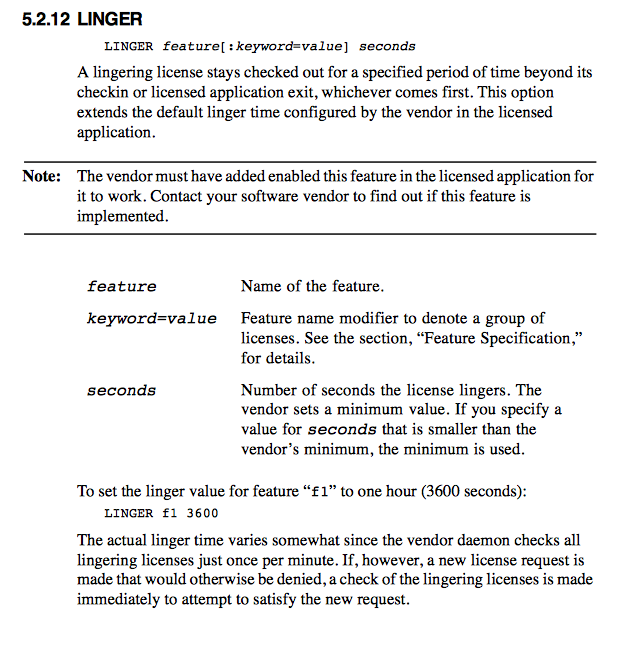
VersIC approximates a per-user licensing scheme using LINGER licensing - this means that once a VersIC license is checked out, it is not available to another user for some time after it has been checked back in.
From the FlexLM user guide ..
Why does VersIC use Linger licenses and not floating licenses?
VersIC/BuildIC are always on applications - they track the state of a users working copy and if somebody else changes something in the repository VersIC will flag the user that they have "stale" data. This essentially means that all active users need a license at all times - you never know when someone else going to do something that will affect you.
In the floating model a user could lose his license if he goes to lunch, doesn't use it for some period and he could end working on old data. This would be a waste of his time since the user won't be able to check in their changes (you can only checkin data if you have a checked out version of the latest data)
Note that the user is licensed for an unlimited number of hosts and displays in the linger model. In the floating license they will be licensed per Cadence session - so if you have 2 Cadence sessions up, in the VersIC/BuildIC case you'll only take 1 license but in the floating case you'll take 2 licenses. The Net result is that most customers prefer linger licenses and Perforce have set their pricing to accommodate this.
Virtual Machines and FlexNet licensing
Flex licensing depends on the server machine having a unique hostid, derived from the MAC address. The MAC address of a VM is not guaranteed to be unique, so Perforce does not support the use of a VM as the license server host.